






|
Quantity
|
Total
|
||
|
|
|||
|
|
|||
LED light sources require a stable current of a specific value. A standard power supply provides only a stable voltage, so for long-term and safe operation of each LED, a special device is required – an LED driver. It converts the 220 V AC mains voltage into DC with precisely defined parameters and protects LEDs from fluctuations and fault conditions.
What an LED driver is and why it is needed
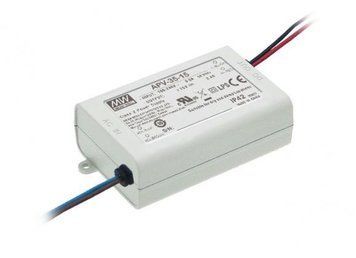
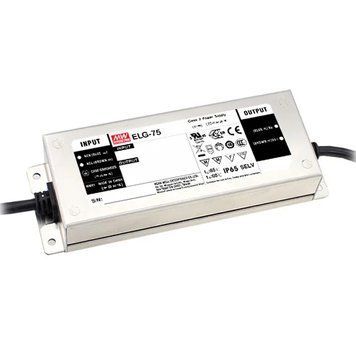
An LED driver is an electronic unit that converts the input alternating voltage (AC) into direct current (DC) of the required value and stabilizes the output current. Connecting a driver before an LED luminaire provides the following advantages:
- current and voltage stabilization;
- protection against short circuit and overvoltage;
- dimming capability (brightness control);
- increased system efficiency and reduced power consumption;
- simplified installation and lighting control.
Without a driver, LEDs quickly degrade or fail due to current fluctuations. Therefore, purchasing a high-quality LED driver is an investment in the longevity of the entire lighting system.
Main types of LED drivers
According to their operating principle, LED drivers are divided into three main groups:
- Linear – simple and inexpensive, efficiency up to 80%, significant heat dissipation. Suitable for low-power systems.
- Switching (PWM) – compact, efficiency up to 95%, wide input voltage range, minimal heat dissipation. The most common type for power levels from 10–100 W and above.
- With dimming function – compatible with 0–10 V controllers, phase-cut dimmers, DALI, ZigBee, and more.
| Driver type | Efficiency | Heat dissipation | Dimming | Recommended application |
|---|---|---|---|---|
| Linear | up to 80% | high | no | low-power luminaires up to 20–30 W |
| Switching | up to 95% | low | possible | most modern LED systems |
| With dimming | up to 95% | low | yes | decorative, architectural, smart lighting |
Service life of LED drivers
Manufacturers specify a service life of 50,000–100,000 hours for high-quality drivers. With proper operation (temperature up to +50 °C, no overloads, moisture protection), the actual service life is 5–10 years of continuous operation. Low-cost models may fail after as little as 20,000 hours.
How to choose the right LED driver
A comprehensive approach ensures system reliability. The main parameters to consider are:
- Power – choose a driver with 20–30% more power than the total LED load.
- Output current and voltage – must exactly match the parameters of your LED strip, matrix, or luminaire (for example, 300 mA at 36 V).
- Protection rating – IP20 for dry indoor areas, IP65/IP68 for outdoor and wet environments.
- Size and form factor – compact models for recessed installation, elongated enclosures for linear luminaires.
- Functionality – dimming support, overtemperature protection, PFC ≥ 0.9.
Buying a properly selected LED driver is much cheaper than later replacing burned-out LEDs.
Methods of connecting LEDs to a driver
The most reliable and recommended method is series connection. All LEDs receive the same current, and the driver supplies the required total voltage (for example, 36 V or 48 V). Parallel and mixed connections are used less frequently due to the risk of uneven current distribution and premature failure of individual elements.
LED drivers are a key component of any modern LED lighting system. Choosing a high-quality driver with appropriate parameters guarantees stable light output, maximum energy efficiency, and a lighting system lifespan of up to 10 years or more. Choose trusted manufacturers and do not economize on the “heart” of your luminaire.
If you need help with selection, contact our specialists. We will help you choose the optimal model based on specifications and budget, and also advise on the most convenient and cost-effective way to purchase an LED driver for your luminaire.