


SEA Company is the official distributor of Traco Power in Ukraine
In power system design, safety is not just a checklist item. It is built into every conductor, case, and layer of insulation. One of the most important choices an engineer makes is determining the class of the power supply unit (PSU). This decision significantly impacts isolation strategies, grounding, compliance testing, and overall system reliability.
The main difference between Class I and Class II systems is the way in which users are protected and electrical equipment is isolated in the event of a fault. Understanding the installation principles for each class will help you avoid costly design errors and ensure you pass certification the first time.
Class I – What you need to know
Class I power supplies use a two-tiered approach to safety: basic insulation and protective earthing. The metal enclosure can potentially become a source of electric shock if the basic insulation between live parts and the chassis is damaged. To avoid this, the enclosure is directly connected to earth, allowing the fault current to flow into the protection circuit. The leakage can trip a circuit breaker or residual current device, thereby protecting the user.
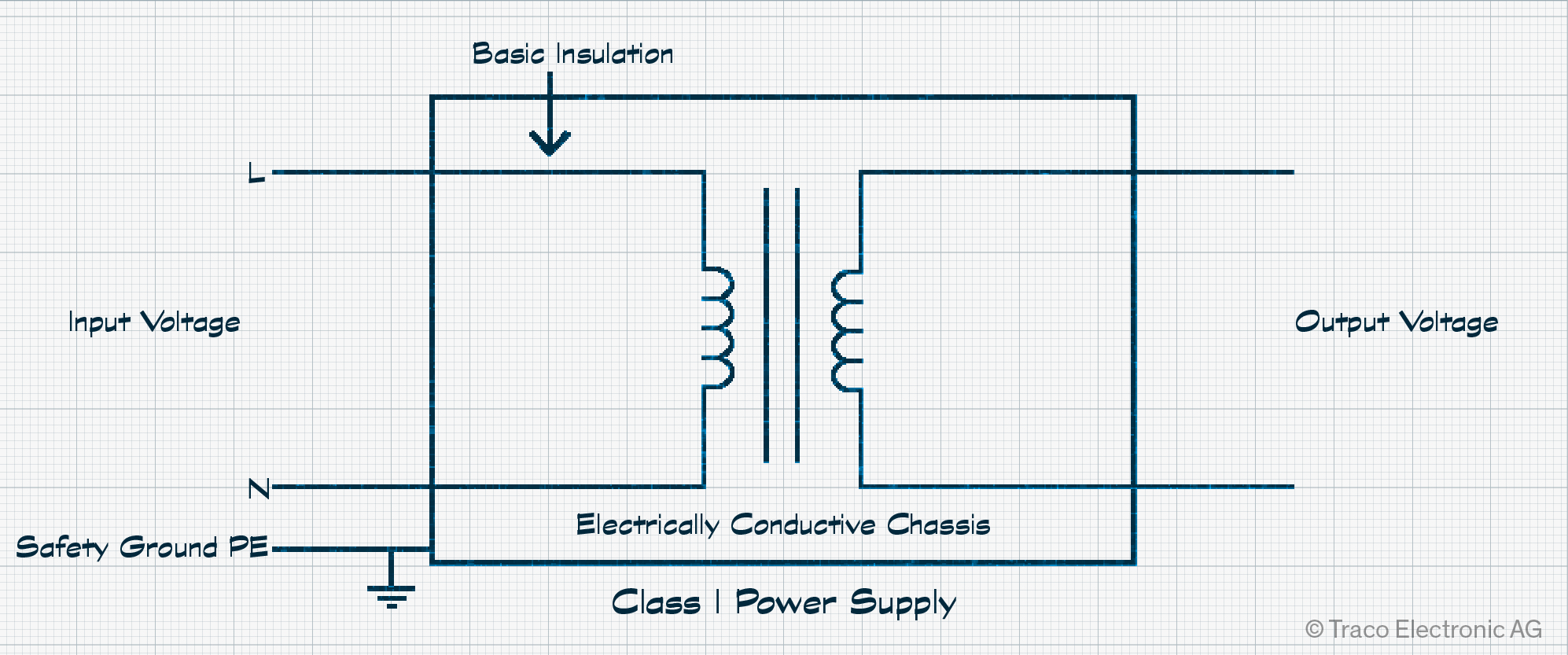
Figure 1: Cross-section of a power supply with basic insulation, Class I
Typically, a Class I PSU has a metal housing and is powered by a three-core cable with a phase, neutral, and ground. This design prevents electric shock if the phase touches the housing.
Where is Class I used?
Class I dominates industrial and professional applications:
- systems with metal cabinets and enclosures
- server racks
- measuring and laboratory instruments
In such cases, grounding is not only a safety requirement, but also a system element.
However, the effectiveness of protective grounding depends on only one thing: the reliability of the grounding circuit. In many buildings, especially old ones, there is no quality grounding. In hospitals and residential premises, where even a single mistake can have serious consequences, this becomes a critical problem.
What is Class II?
Class II power supplies take a different approach to safety. Instead of grounding the enclosure, they use double or reinforced insulation. This method physically separates live parts from the user by multiple barriers, ensuring that there is no risk of shock even if a single layer of insulation fails.
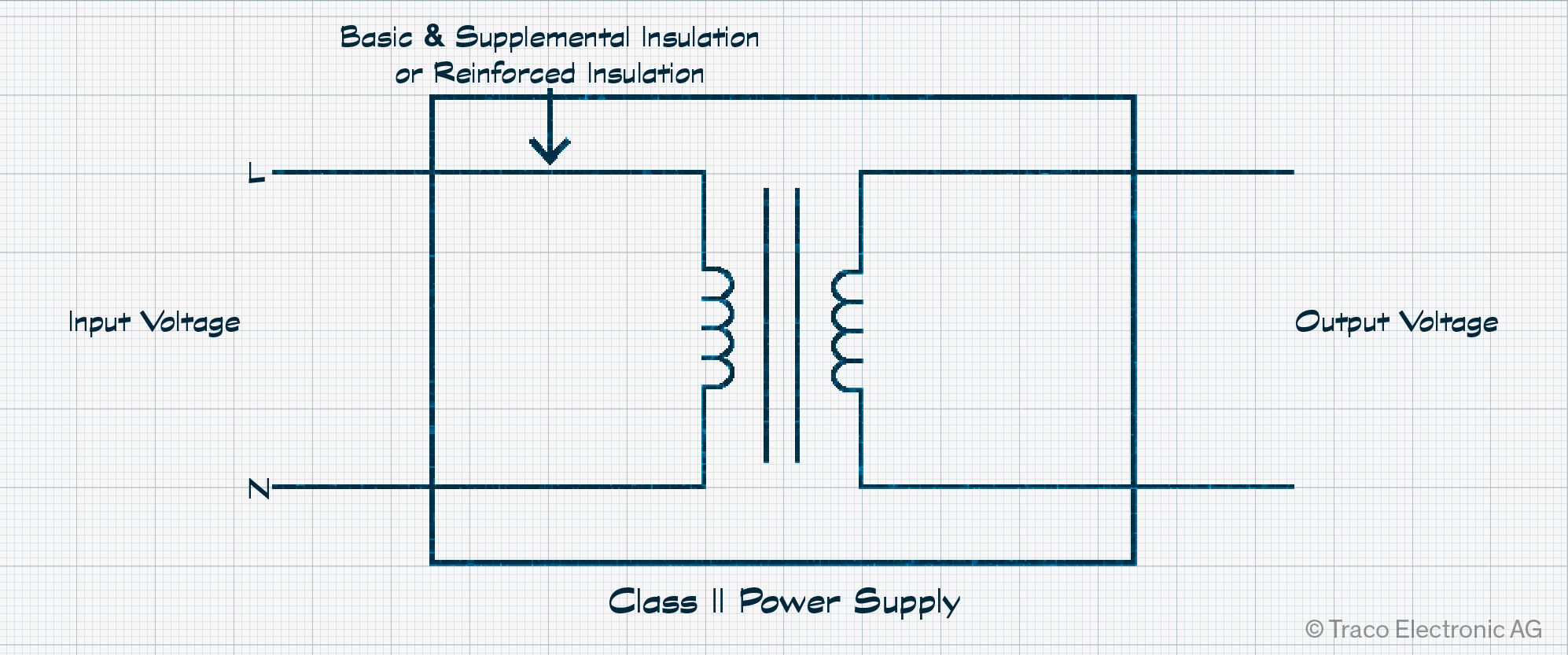
Image 2: Cross-section of a double-insulated, internally separated power supply housing
Typically Class II PSUs:
- are manufactured in a plastic housing or in an open modular design
- have no metal parts accessible to the touch
- connected via a two-core cable (phase and neutral)
Since there is no contact with the ground, installation becomes easier and safer in places where reliable grounding cannot be provided.
Why Class II is preferred for domestic and medical use
In medical devices used in the home, safety standards such as IEC 60601-1-11 require the use of Class II power supplies. The reason is obvious: a device that is not dependent on a potentially unreliable building grounding system is significantly safer for patients at increased risk.
Likewise, phone chargers, laptop adapters, and other consumer electronics. Protection based solely on insulation is a simple and reliable solution for such conditions.
Installation requirements: class and method compliance
Class I installation
When installing a Class I power supply, the grounding must be physically reliable and electrically continuous.
It is necessary to ensure:
- correct tightening of screws with the required torque
- paint removal or anodizing at contact points
- checking grounding integrity during testing
The PSU case must be electrically connected to the metal chassis of the system to maintain its protective function.
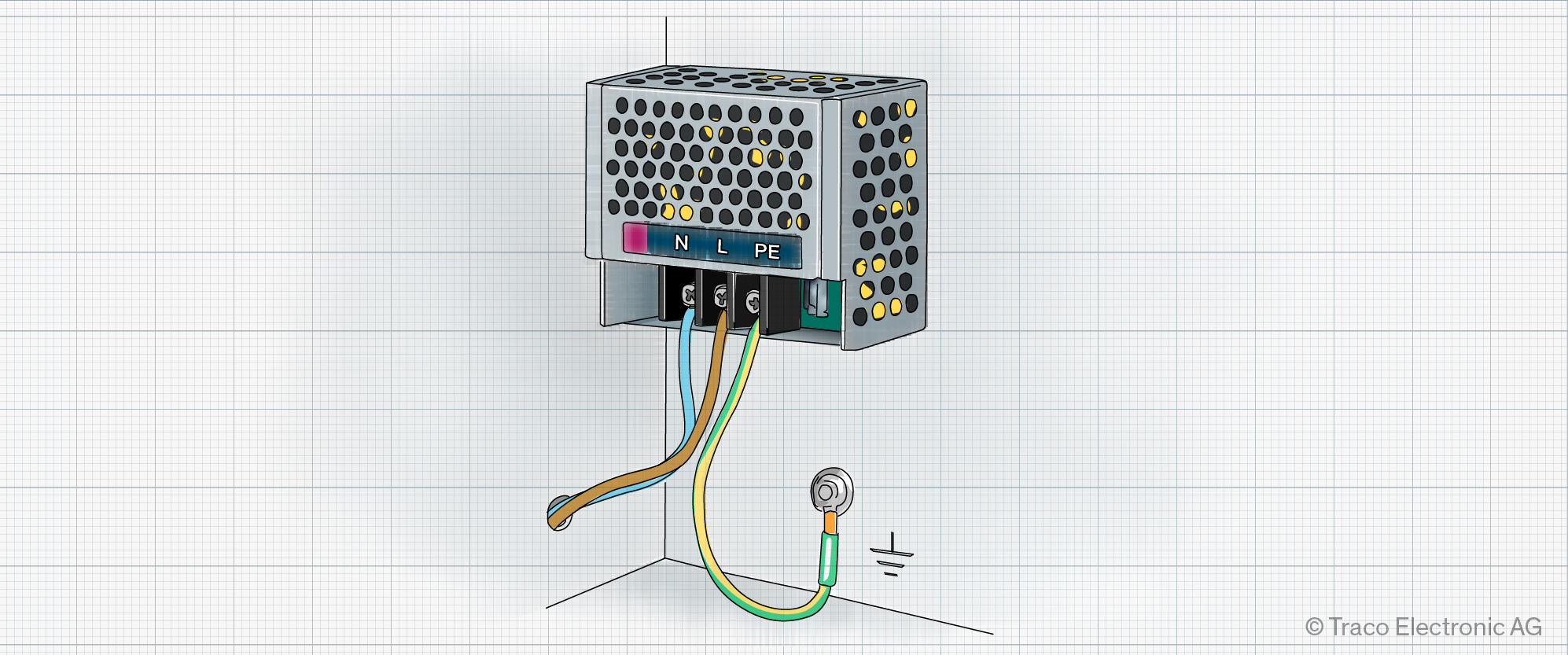
Image 3: Photo of a Class I power supply installation with proper grounding inside a metal enclosure
If the protective earth is not connected or a high impedance section is created due to poor earthing, the safety function becomes invalid.
Class II installation
Class II power supplies must remain fully insulated. Any connection to protective earth is prohibited. It is important to avoid inadvertent contact with conductive parts: mounting screws, metal brackets, etc. If necessary, use insulating gaskets, especially when installed in a metal enclosure.
Functional grounding (not protective!) may be required to reduce electromagnetic interference, but it must be isolated from PE so that the PSU remains Class II according to certification.
Eligibility requirements and selection tips
How to choose the right power supply
Data sheets are sometimes difficult to understand and contain different certification wording, so determining the PSU class can be tricky. This is where it is important to start.
First of all, you need to find the protection class marking in the certification section of the datasheet.
Do not make assumptions based on the housing material or cable type - the document should clearly state Class I or Class II with references to the IEC or EN standard.
Tips:
- For Class I, ensure that there is a grounding terminal and that it complies with Class I standards.
- For Class II, look for the designation “double insulation”, “reinforced insulation” or the square within a square symbol
- Review the connector drawing to make sure there is no PE contact.
- Read the installation instructions to avoid accidentally making a connection to the metal chassis.
Installation conditions also influence the choice. For example:
- Plastic housing without exposed metal parts → Class II is more often chosen to simplify certification
- Metal enclosures with leakage currents required → Class I preferred
Checklist for engineers
To avoid integration problems, it is worth checking:
- Is the PSU clearly labeled Class I or Class II according to system requirements?
- For Class I, is the protective earthing properly connected and its continuity checked?
- For Class II - does the installation method ensure the maintenance of double or reinforced insulation?
- Is the leakage current within the limits (e.g. <70 µA for touch current)?
- Does the power supply meet EMC requirements and does it have a margin for testing?
How to avoid common mistakes
One of the most common mistakes when integrating power supplies is confusing UL Class 2 with IEC Class II. UL Class 2 refers to current and voltage limitations to improve wiring safety, while IEC Class II specifies insulation and protection of the user from electrical shock. These classes are not interchangeable.
Another common problem is mixing different protection schemes.
For example:
- Installing a Class II power supply in a grounded metal enclosure without proper insulation can create unwanted leakage paths to ground, defeating the concept of double insulation.
- conversely, the absence of a ground connection in a Class I system completely deprives it of its protective function
Conclusion
Class I and Class II power supplies represent two different concepts of electrical safety:
- Class I protects the user through grounding
- Class II uses double or reinforced insulation, so grounding is not required at all.
The choice between them depends on:
- type of application
- body material
- operating conditions
It is equally important to perform the installation correctly, because mistakes at this stage can make even the safest project unsafe.
Engineers should carefully monitor the requirements of standards and recommendations in technical documentation. If in doubt, contact the power supply manufacturer.
Source: tracopower.com


